Introduction
Introduction
As Pakistan grapples with escalating environmental pressures; moreover, industries nationwide are increasingly adopting sustainable practices to ensure long-term viability. One pivotal advancement in this shift is the widespread use of industrial reverse osmosis (RO) systems, which not only combat water scarcity but also promote eco-friendly manufacturing. These large-scale water purification setups are essential in sectors like textiles, pharmaceuticals, food processing, and chemicals, where high-purity water is critical. At WaterZone, we specialize in custom industrial RO plants tailored for Pakistan’s unique challenges; thus, helping businesses achieve efficient wastewater recycling and contaminant removal for a greener future. In 2025, with ongoing water stress, integrating these systems has become indispensable for balancing industrial growth and environmental stewardship.
Understanding Industrial RO Plants and Their Role in Water Purification
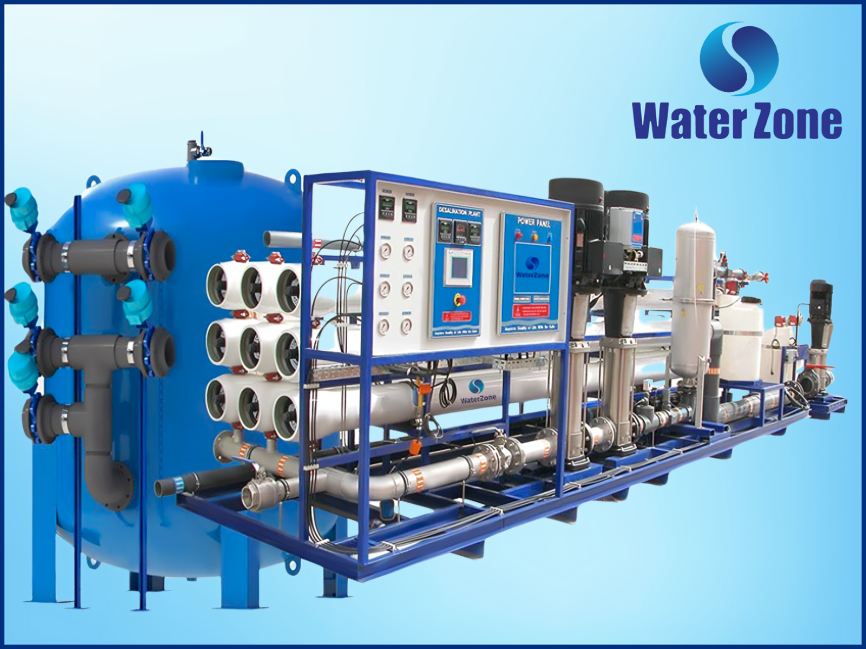
Industrial RO plants utilize reverse osmosis technology to filter out salts, chemicals, heavy metals, and other impurities from water sources like borewells, municipal supplies, or wastewater. The process involves forcing water through a semi-permeable membrane under high pressure, separating clean permeate from concentrated brine. For instance, in Pakistan’s manufacturing hubs, these systems handle capacities from 28,000 to over 1,000,000 gallons per day (GPD), ensuring ultra-pure water for processes that demand precision.
Additionally, modern setups include pre-treatment stages like sediment filters, activated carbon, and ultrafiltration (UF) to enhance membrane longevity and efficiency. WaterZone’s designs incorporate energy-efficient pumps and automated controls, making them ideal for sustainable industrial water treatment in diverse applications.
The Ongoing Water Crisis in Pakistan and Its Impact on Industries
Pakistan remains one of the world’s most water-stressed nations; however, despite warnings of potential scarcity by 2025, the crisis persists with depleting groundwater and polluted surface water. Industrial sectors consume vast amounts of freshwater, exacerbating issues like high TDS levels, arsenic contamination, and bacterial pollution. In regions like Punjab and Sindh, over-extraction via tube wells has led to rapid aquifer depletion, threatening manufacturing pakistan.
Consequently, without advanced wastewater recycling systems, industries face operational disruptions, higher costs, and environmental penalties. Industrial RO plants address this by enabling zero-liquid discharge (ZLD) approaches, recycling up to 85-90% of wastewater and reducing reliance on fresh sources.
How Industrial RO Plants Support Sustainable Manufacturing in Pakistan
Industrial reverse osmosis systems play a multifaceted role in promoting sustainability; furthermore, they align with Pakistan’s push for greener practices amid climate change.
1. Water Recycling and Conservation
These plants enable efficient wastewater recycling in industry, reclaiming up to 80% of treated water for reuse. For example, in textile dyeing processes, RO systems purify effluent, conserving precious groundwater.
2. Reduction in Environmental Pollution
By removing hazardous contaminants before discharge, RO units minimize pollution from industrial effluents, protecting rivers and ecosystems.
3. Compliance with Environmental Regulations
With stricter Pak-EPA standards, RO integration ensures adherence to discharge limits, avoiding fines and enhancing corporate sustainability profiles.
4. Energy Efficiency and Operational Savings
Advanced models feature low-energy membranes and variable frequency drives (VFDs), reducing power consumption in high-demand setups.
5. Support for Green Certifications and Global Competitiveness
RO plants facilitate ISO 14001 compliance and eco-friendly product labeling, boosting exports to markets demanding sustainable sourcing.
WaterZone’s solutions emphasize these benefits, offering modular designs for scalable industrial water purification.
Types of Industrial RO Plants Available in Pakistan
Various configurations suit different needs; for instance, standard brackish water RO plants handle TDS up to 5,000 ppm, while seawater desalination units manage higher salinity. Containerized mobile RO plants provide flexibility for remote sites or emergencies. Hybrid UF+RO systems combine ultrafiltration for enhanced pre-treatment, ideal for textile wastewater.
Best Industrial RO Plants in Pakistan 2025: Recommendations for Every Sector
In 2025, top providers focus on durability and efficiency. WaterZone leads with custom-engineered systems, while others like Hydronix, Aquaguard, and RO Plant Pakistan offer reliable options.
Key recommendations:
- Brackish Water RO: WaterZone High-Capacity Series for pharma and food industries.
- Manufacturing Pakistan: Pure Aqua units for coastal manufacturing.
- Containerized Systems: ROplant.pk models for mobile applications.
- Hybrid UF+RO: Hydronix setups for textiles.
For a quick comparison:
| Plant Type | Top Model | Key Features | Best For |
| Brackish Water RO | WaterZone Custom | Multi-stage filtration, auto controls | Pharma, food processing |
| Seawater Desalination | Pure Aqua SWI Series | High TDS removal, energy recovery | Coastal industries |
| Containerized Mobile | ROplant.pk Plug-and-Play | Portable, quick setup | Construction, remote sites |
| Hybrid UF+RO | Hydronix Pre-Engineered | Enhanced pre-treatment, high recovery | Textiles, wastewater |
| Solar-Powered RO | Chunke Water Solutions | Renewable energy integration | Rural manufacturing |
These ensure optimal sustainable water treatment for Pakistan’s industries.
Real-World Case Studies from Pakistani Industries
Success stories highlight RO’s impact; for example, Kohinoor Textile Mills in Lahore achieved 85% water recovery using UF+RO for dyeing wastewater. Similarly, pharmaceutical firms in Karachi employ RO for ultra-pure water, ensuring compliance and quality. In Faisalabad’s textiles, multiple plants recycle 80% of effluent, reducing freshwater use. WaterZone has implemented similar systems in food processing, enhancing hygiene and sustainability.
Common Myths About Industrial RO Plants Debunked
One myth is that RO wastes too much water; however, modern recovery rates exceed 80% with efficient designs. Another is high energy use, but innovations like solar integration minimize this. Finally, some believe they’re only for large firms; yet, scalable options suit SMEs.
Challenges and Opportunities in Adopting Industrial RO Systems
Initial setup barriers exist for SMEs; nevertheless, government incentives and long-term savings encourage adoption. Opportunities include renewable energy hybrids for off-grid areas, fostering innovation in sustainable manufacturing.
Frequently Asked Questions About Industrial RO Plants in Pakistan
What is the typical recovery rate for industrial RO systems?
Up to 85-90%, depending on design and water quality.
How do RO plants help with Pakistan’s water crisis?
By enabling wastewater recycling and reducing freshwater demand in industries.
Are there solar-powered options available?
Yes, for energy-efficient operations in remote sites.
Why choose WaterZone for industrial water treatment?
We provide custom, nationwide solutions with expert installation and support.
Conclusion
In 2025, industrial RO plants are essential for sustainable water treatment in Pakistan’s manufacturing sector; therefore, embracing them ensures resource conservation and regulatory compliance. WaterZone leads in delivering reliable, efficient systems that outperform competitors through innovation and tailored service. As a result, contact us for consultations and transform your operations with clean, recycled water today.